Corporate Training Programs: Beyond Workshops and Traditional Learning

exxelo
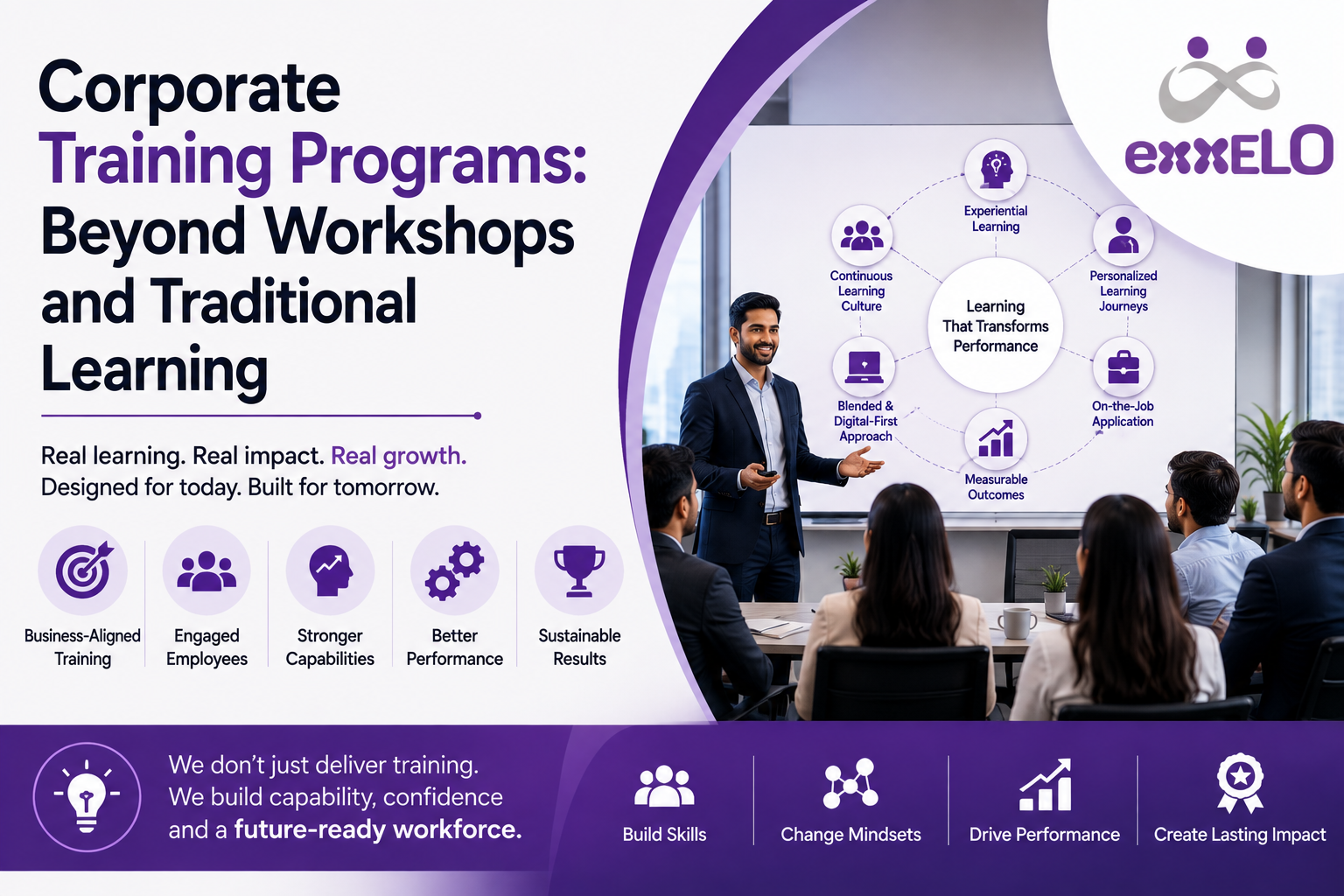
For decades, corporate training meant one thing: a conference room, a facilitator with a slide deck, and a full day pulled away from regular work. That model is fading fast. Organisations today are rethinking how they build skills, and the shift is visible across almost every industry. Companies that once relied on annual workshops are now investing in structured, ongoing corporate training programs that fit into the flow of daily work rather than interrupting it.
This change is not just a passing trend; it is a response to real business pressure. Skills are becoming outdated faster than ever, employees expect more flexible learning options, and leaders are demanding measurable returns on every dollar spent on development. Understanding what modern training actually looks like can help HR leaders, business owners, and department heads build programmes that keep pace with a changing workforce.
Why the One-Day Workshop Model Is Losing Ground
Traditional workshops had their place, but they were never designed for how people actually learn or how quickly business needs shift. A single day of instruction rarely translates into lasting behaviour change. Employees walk out with notes and good intentions, then return to their desks where the pressure of daily tasks pushes new skills aside within weeks.
Recent industry data backs this up. A large majority of learning and development professionals agree that continuous learning is essential for career success, yet only a small share of organisations currently qualify as career development leaders with robust, ongoing programmes. That gap between what companies plan and what they actually deliver is one of the biggest challenges facing corporate learning teams right now, and it is a major reason skills gaps continue to widen across industries.
There is also a cost problem tied to the old model. Pulling an entire team out of production for a full day is expensive, and the return on that investment is difficult to prove after the fact. Modern leaders want training that shows up in performance metrics, not just attendance sheets and feedback forms.
What Modern Corporate Training Actually Looks Like Today
Continuous and Bite-Sized Learning
Instead of one large event, many companies now spread learning across shorter, more frequent sessions. Microlearning modules, short videos, and quick skill drills fit into a lunch break or a gap between meetings. This approach respects how busy employees actually are, and it reinforces knowledge through repetition rather than a single exposure that fades within days.
AI Personalized Learning Paths
Artificial intelligence has moved from a buzzword to a practical tool inside learning platforms. AI‑powered systems now assess an employee’s current skill level, recommend relevant content, and adjust the pace of learning based on performance. Recent surveys show that a majority of employees using AI‑supported learning tools report understanding material better and studying more efficiently than with static, one‑size‑fits‑all courses.
Blended and Hybrid Delivery
Modern programmes rarely rely on a single format. A typical initiative might combine a short live session with a manager, self‑paced online modules, peer discussion groups, and on‑the‑job coaching. This blended approach lets companies match the delivery method to the type of skill being taught, whether that is a technical certification or a soft skill such as communication or conflict resolution.
Data-Driven Measurement of Outcomes
Where old‑style workshops relied on satisfaction surveys handed out at the end of the day, modern training is judged on performance data. Completion rates, skill assessments, on‑the‑job application, and business metrics like productivity or error reduction are tracked over time. This shift allows leaders to see which programmes are actually working and which ones need to be redesigned or retired.
Gamification and Active Participation
Points, leaderboards, badges, and simulations have become common features inside modern learning platforms. A large share of the world’s biggest companies now uses some form of gamification in their training because it increases engagement and helps information stick. Passive, lecture‑style formats are steadily being replaced by interactive, participatory experiences that ask employees to apply a skill rather than just watch it explained.
The Business Case: Why Companies Are Investing More
The global market for workplace learning continues to expand, driven largely by the need to close persistent skills gaps. Employers across nearly every sector report that a meaningful share of their workforce will need new skills within the next several years, and many name this mismatch as their single biggest obstacle to growth and transformation.
Companies that build strong learning cultures tend to see measurably lower turnover, which translates directly into savings on recruitment and onboarding costs. This is where training and talent strategy start to overlap. A well‑designed development programme does more than teach a skill, it signals to employees that the organization is invested in their future, which improves retention and morale at the same time.
Budgets reflect this shift in priority. Most learning and development leaders expect their budgets to stay flat or increase in the coming year, with digital skills, AI readiness, and leadership capability named as the top areas of investment. Training has moved from being viewed as a discretionary expense to being treated as core business infrastructure, on par with technology or operations spending.
Building a Modern Training Strategy for Your Organization
Aligning Training with Business Goals
The starting point for any effective programme is a clear connection between the skills being taught and the outcomes the business actually needs. Training built around vague goals like improving communication in general rarely produces measurable results. Instead, successful programmes start with a specific business challenge, such as reducing customer complaints or improving sales conversion rates, and design content that targets that exact gap.
Involving Managers and Leadership
Frontline managers play a bigger role in training success than most organizations realize. Research consistently shows that many managers lack the support they need to help their teams find and apply relevant learning opportunities. A modern strategy treats managers as active partners in development, not just approvers of training requests. Programs that pair leadership development training with technical skill building tend to produce more consistent results, because managers who understand training principles are better equipped to reinforce them day to day.
Choosing the Right Partner
Few internal teams have the bandwidth to design, deliver, and measure a full training ecosystem on their own. Many organizations now work with outside partners who bring both instructional expertise and access to modern learning technology. Working with experienced training consulting services can help a company avoid common pitfalls, speed up implementation, and design programs that are tailored to its specific industry and workforce rather than relying on generic, off-the shelf content.
Common Mistakes Companies Make When Modernizing Training
Even organizations that recognize the need for change often stumble in execution. One frequent mistake is investing heavily in new content or technology without building the support structure needed to make it usable. A library of excellent courses does little good if employees cannot easily find what applies to their role or do not have time set aside to complete it.
Another common error is measuring the wrong things. Attendance and completion rates tell a company almost nothing about whether a skill was actually learned or applied on the job. Programs need clear, specific metrics tied to real performance, not just participation numbers.
Finally, many companies underestimate the human element. AI tools and digital platforms are valuable, but they work best when combined with real coaching, mentorship, and opportunities for employees to practice new skills with feedback from a person, not just a screen. The organizations getting the most out of modern training are the ones balancing new technology with genuine human connection.
Signs Your Organization Needs a Training Refresh
Certain warning signs tend to appear before a training program becomes noticeably outdated. Declining participation in optional learning sessions, a rise in repeated errors on tasks that were covered in past training, and managers reporting that new hires take longer than expected to reach full productivity are all signals worth investigating. If employee surveys show low confidence in available development opportunities, that is often an early indicator that the current approach needs to be redesigned rather than simply refreshed with new content.
Companies that regularly review their training strategy against these signals tend to catch problems early, before they show up in turnover numbers or missed business targets. A short internal audit, comparing current programs against business goals and employee feedback, is often enough to identify where the biggest gaps exist.
How to Measure Training ROI in Practice
Proving the value of a training investment does not require complex formulas, but it does require planning the measurement approach before a programme launches, not after. Start by identifying one or two business metrics the training is meant to influence, such as reduced onboarding time, fewer support tickets, or improved sales close rates. Capture a baseline before training begins, then track that same metric at set intervals afterward, such as thirty, sixty, and ninety days out.
Pairing quantitative metrics with short manager check ins adds important context that numbers alone can miss. A manager who notices a team member applying a new skill in a real situation provides evidence that a spreadsheet cannot capture. Combining both approaches gives leadership a fuller, more convincing picture of what the training actually accomplished, and it makes future budget conversations far easier to win.
Final Thoughts
Corporate training has moved well beyond the single day workshop. Today’s most effective programs are continuous, personalized, data informed, and closely tied to real business outcomes. Companies that make this shift are not just checking a box, they are building a workforce that can adapt as skills requirements continue to change.
If your organization is ready to move beyond outdated training formats and build a program that actually delivers results, our team can help you design a strategy suited to your goals and your people. Contact us today to start the conversation.
