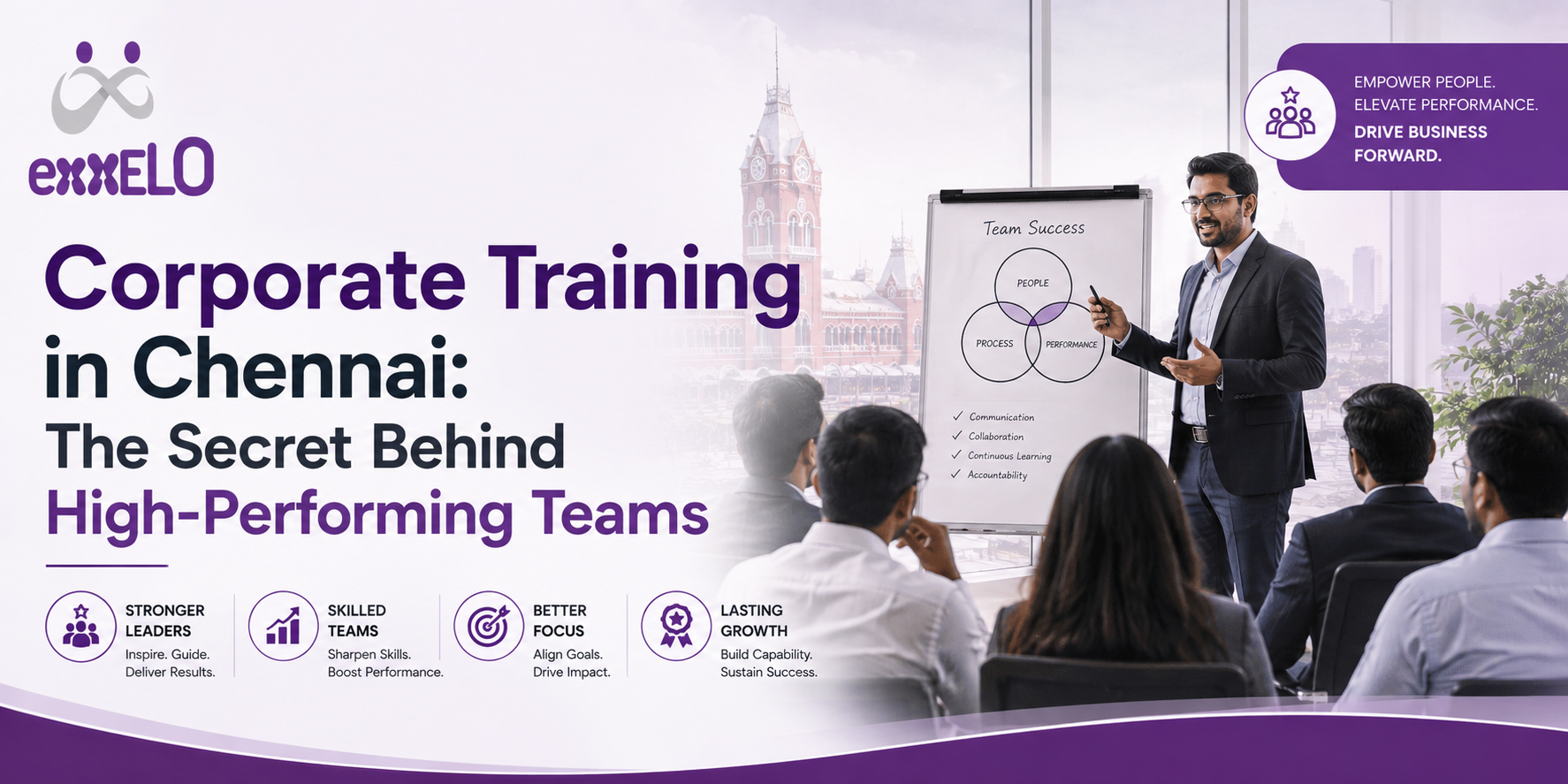
Corporate Training in Chennai: The Secret Behind High-Performing Teams

Corporate training session in Chennai helping employees build leadership and teamwork skills

Walk into any high-performing company in Chennai and one thing usually stands out: the team operates with a level of consistency, capability, and confidence that did not happen by accident. That level of performance is almost always the product of deliberate investment in people, not just hiring well and hoping for the best. Structured corporate training programs in Chennai give organisations a repeatable way to close skill gaps, build stronger managers, and keep employees engaged long enough to become genuinely productive. This article explains what separates effective training from a checkbox exercise, and how Chennai-based companies are using it to build teams that consistently outperform their peers.

Why Corporate Training Has Become a Business Priority

The scale of investment going into workplace learning across India reflects how seriously organisations now treat this function. India’s corporate training market was valued at roughly fifty-two thousand crore rupees in 2024 and is projected to grow at a compound annual rate of around fourteen percent through 2028. That growth is being driven by real pressure points inside organisations. Recent industry surveys found that a large share of Indian professionals plan to invest in upskilling to stay relevant, while a significant portion of employees remain completely untrained in a given financial year, exposing a persistent gap between intention and execution at the organisational level. Meanwhile, the vast majority of employees are already using artificial intelligence tools at work, often without any structured guidance on how to use them safely or effectively, which adds urgency to building proper training infrastructure now rather than later.

What Actually Makes a Team High-Performing

Shared Understanding of Goals

High-performing teams do not just work hard, they work toward the same clearly defined outcome. Training programs that align every department around shared metrics reduce the friction that comes from teams unintentionally working against each other.

Consistent Skill Levels Across the Team

A team is only as strong as its weakest critical skill gap. Structured training ensures that capability is spread evenly rather than concentrated in one or two star performers who become bottlenecks themselves.

Strong Middle Management

Frontline managers have more day-to-day influence over employee performance and retention than almost any other factor in the organisation. Training that specifically develops supervisory and coaching skills at this level tends to produce outsized returns compared to training aimed only at senior leadership.

Psychological Safety and Feedback Culture

Teams that can give and receive honest feedback without fear tend to solve problems faster and hide fewer mistakes. Many training programs now explicitly build feedback skills and conflict resolution into their curriculum rather than treating these as soft, optional add-ons.

Core Components of an Effective Training Program

Needs Assessment Before Content Design

Programs that begin with a proper skills gap analysis are far more likely to succeed than generic, one-size-fits-all courses. This step identifies exactly which roles need which capabilities, avoiding wasted time on training that does not map to real performance gaps.

Blended Delivery Formats

Modern training increasingly blends instructor-led sessions with digital, on-demand content. Microlearning in particular, delivered in short, focused bursts, has become central to workplace learning strategy because it fits into busy schedules without requiring employees to step away from work for an entire day.

Leadership and Management Development

Building capable leaders is not a one-time event. Ongoing leadership development programs across India help organisations create a pipeline of managers ready to step into bigger roles as the company grows, rather than scrambling to promote someone unprepared when a vacancy opens suddenly.

Measurement Tied to Business Outcomes

Training without measurement is difficult to justify to leadership. Effective programs track outcomes like productivity, error rates, or retention alongside completion rates, connecting the training investment directly to business results rather than treating attendance as the goal itself.

Emerging Trends Shaping Training in 2026

Artificial intelligence is reshaping how training content gets built and delivered, with many learning and development teams now using AI to personalise content and generate updated material significantly faster than traditional methods allowed. Skills-based learning is also replacing the older model of training tied to broad job titles, with organisations increasingly mapping learning paths to specific, measurable skills rather than generic role categories. At the same time, younger employees entering the workforce show a clear preference for mobile-first, video-led, bite-sized content over long-form lectures, meaning training formats built five years ago may already feel outdated to a large share of today’s workforce. Gamification and interactive formats are also gaining traction as a way to sustain engagement, particularly for compliance-style training that employees have traditionally found tedious.

Common Mistakes Companies Make With Training

Treating Training as a One-Time Event

A single workshop rarely changes behaviour permanently. Skills fade without reinforcement, so effective programs build in follow-up sessions, refreshers, and on-the-job application opportunities rather than a single day of content delivered once and never revisited.

Ignoring Manager Involvement

Employees who return from training to managers who show no interest in reinforcing new skills tend to revert to old habits within weeks. Programs that involve managers directly, whether through coaching conversations or joint goal setting, see far better retention of new behaviours.

Measuring Attendance Instead of Impact

Completion certificates look good on paper but say very little about whether performance actually improved. Organisations that focus purely on attendance metrics often struggle to justify continued investment when leadership eventually asks for evidence of return.

Choosing Generic Content Over Customised Programs

Off-the-shelf training modules can be a reasonable starting point, but they rarely address the specific challenges unique to your industry, team structure, or market. Customised programs built around real scenarios your employees encounter tend to produce stronger, more durable results.

Building a Training Strategy That Sticks

Organisations that get the most value from training treat it as an ongoing system rather than an isolated event on the HR calendar. That means setting a clear annual learning calendar, tying budget decisions to specific skill gaps identified through assessment, and reviewing outcomes regularly enough to course correct if a program is not delivering results. It also means securing genuine buy-in from senior leadership, since training initiatives that lack visible executive support rarely get the participation or seriousness needed to actually change how teams operate day to day.

How Different Industries Approach Training

Manufacturing and Operations Teams

Factory-floor teams typically need a mix of technical skill certification and safety compliance training, delivered in a format that does not pull employees away from production for extended periods. Short, scenario‑based sessions tend to work better here than long classroom lectures.

Sales and Customer-Facing Teams

Sales teams benefit most from role-play-based training that mirrors real customer objections and negotiation scenarios, rather than generic communication workshops. Ongoing coaching after the initial session tends to matter more than the training itself for long-term improvement in close rates.

Technology and Engineering Teams

Engineering teams often need a combination of technical upskilling and softer skills like cross-functional communication, particularly as teams grow and start coordinating across more departments. Given how quickly technical tools evolve, shorter and more frequent training cycles tend to outperform infrequent, lengthy programs.

Customer Support and Operations

Support teams typically see the fastest measurable improvement from training, since metrics like resolution time and customer satisfaction scores respond quickly to better process knowledge and communication skills. This makes support functions a useful starting point for organisations testing a new training approach before rolling it out more broadly.

Frequently Asked Questions

How often should a company run corporate training?

Most effective programs run on a continuous cycle, with shorter refresher sessions spaced throughout the year and one or two larger initiatives annually. The right cadence depends on how quickly the relevant skills and tools in your industry are changing.

What is the difference between training and leadership development?

Training generally refers to building specific job-related skills, while leadership development focuses on the broader capabilities needed to manage people, make decisions under uncertainty, and drive strategy. Most organisations need both, delivered through separate but complementary programs.

How do we know if our training budget is being spent effectively?

Track outcomes tied directly to business performance, such as reduced error rates, faster onboarding time for new hires, or improved retention among trained employees, rather than relying solely on attendance or satisfaction survey scores. Comparing these metrics before and after a program gives a much clearer picture of actual return on investment.

Conclusion

High-performing teams are built, not discovered. The organisations pulling ahead in Chennai’s competitive business environment are the ones treating employee development as a core operating system rather than an occasional line item in the budget. If your team’s performance depends on skills that have not kept pace with how fast the market is changing, a properly structured training program can close that gap faster than most other interventions available to leadership. Reach out to our corporate training team in Chennai to design a program built around the specific goals and challenges your organisation is facing right now.

Exxelo-new-logo-14th-june-01

At Exxelo, we believe that sustainable business growth stems from the strength of people, strategy, and streamlined systems. We are a people-first business consulting company with a 360° approach—offering end-to-end solutions across Recruitment, Business Consulting, Training & Development, and Payroll Management.

Contact Us

© 2025 All Rights Reserved By Exxelo Business Consulting