Ask ten Chennai business owners how their year is going, and most will tell you some version of the same story. Orders are steady. Customers keep coming back. And yet, somehow, growth still feels just out of reach, like it is always waiting on the next quarter, the next hire, the next stroke of luck. Recent discussions around India's SME ecosystem increasingly highlight a familiar challenge: many businesses are still focused on strengthening cash flow and operational resilience before they can pursue institutional scale. This is precisely the gap business coaching chennai has started to fill, not by promising overnight transformation, but by helping owners tell the difference between being busy and actually building something.
Why So Many Chennai Businesses Feel Stuck in Survival Mode
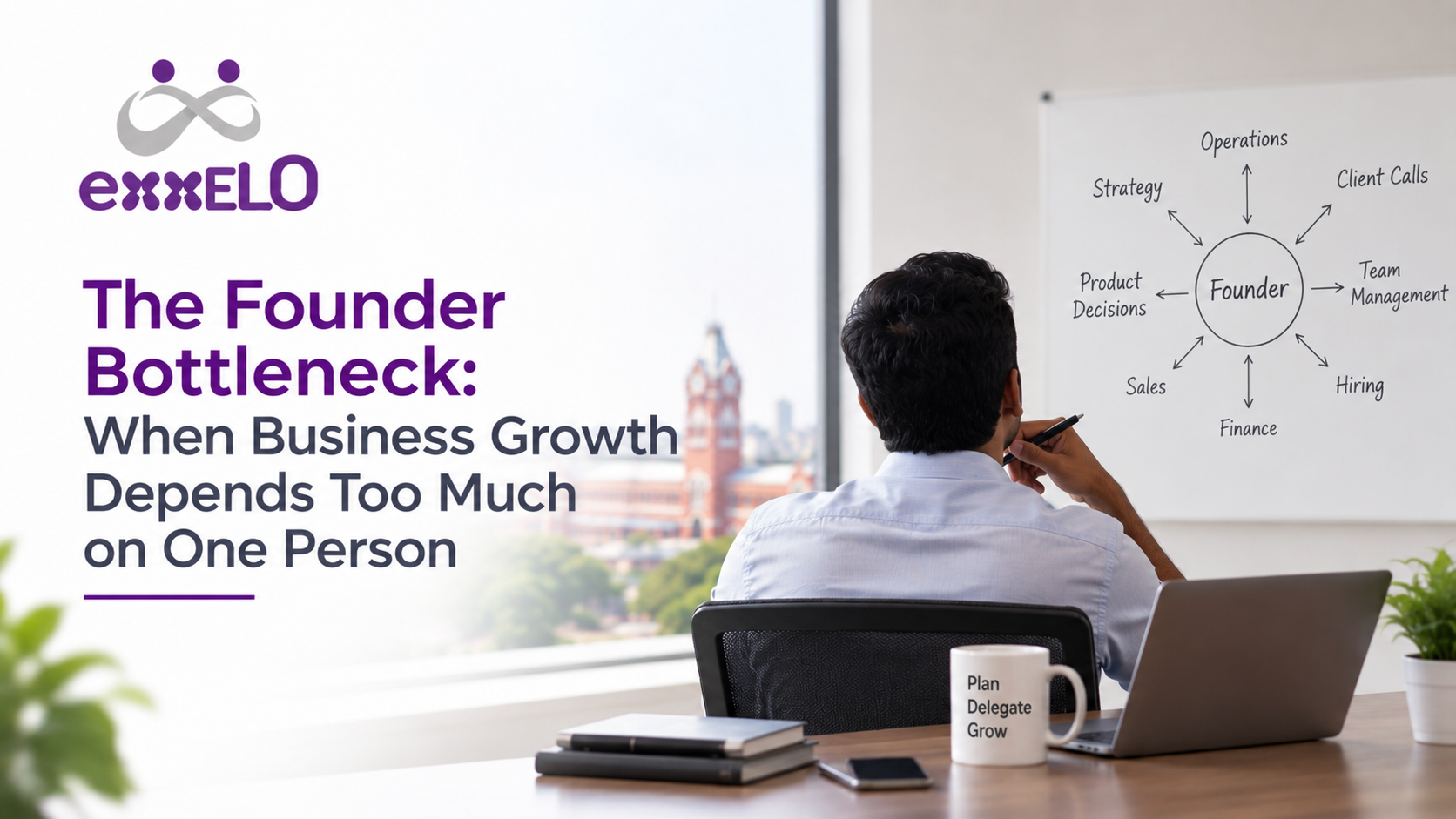
The Difference Between Running a Business and Owning One There is a particular kind of exhaustion that comes from being the person everyone waits for. The owner who approves every purchase order, answers every client call, and somehow ends up double checking the invoices at midnight, again. It is not that these founders lack ambition. It is that survival, when it becomes a daily habit, quietly crowds out the space where strategy is supposed to live. India's MSME sector is enormous, with government data showing more than 7.47 crore enterprises employing over 32.82 crore people, and it accounts for around 31.1 percent of India's GDP, yet a large share of these businesses are still structurally wired for resilience rather than expansion. That distinction matters more than it sounds. A resilient business survives a bad quarter. A business built to scale plans for what comes after it. The Numbers Behind the Struggle This is not just a feeling. A SIDBI-commissioned Crisil study estimates the addressable credit gap for India's MSME sector at around 30 lakh crore rupees. Although formal credit access has improved, SIDBI's latest assessments continue to identify meaningful gaps in financing access across parts of the sector. A 2026 Parliamentary Committee report also flagged delays in operationalising some Budget announcements affecting MSMEs, noting that certain measures remained under inter-ministerial consultation. The picture that emerges is fairly clear: the challenge for most small businesses is rarely a shortage of ambition. It is the absence of systems, structure, and someone outside the daily grind who can point out what the owner is too close to see. The sector also accounts for nearly half of India's exports and supports hundreds of millions of livelihoods, making the survival versus scale question economically significant well beyond any single business.
What Business Coaching Actually Changes
Clarity Before Strategy Many founders do not walk into coaching with a blank slate. They walk in with three or four half-formed ideas about where the business should go, usually all at once. A good coaching relationship does not add a fifth idea to the pile. It helps narrow the list down to the one or two that actually matter right now, which sounds simple until you have tried doing it alone at eleven at night with a laptop and a coffee that has gone cold. There is something genuinely different about saying a plan out loud to someone who will push back on it, rather than only ever running it past yourself. Pricing, Systems, and the Quiet Cost of Guessing Undercharging is a pattern that can emerge in growing businesses, and it rarely comes from a lack of business sense. It often comes from fear, the quiet worry that raising a price will cost a client the owner cannot afford to lose. Coaching tends to surface this pattern early, because an outsider can spot the underpricing that a founder has simply grown used to. The same goes for systems. A business that depends on its owner for every decision can become difficult to scale. It is a very demanding job, and coaching often becomes the process of building the structure needed to change that, piece by piece, decision by decision, until the owner is no longer the single point of failure holding everything up.
Where a Business Consultant Fits Into the Picture
Coaching and consulting can overlap, but they address different needs. Business consulting is generally more focused on the business itself, such as strategy, operations, HR, sales growth, and organisational challenges, while coaching tends to focus more heavily on the leader's decision-making, priorities, and development. In practice, growing businesses may benefit from both at different stages, which is exactly the kind of overlap a business consultant chennai is often brought in to navigate alongside a founder rather than instead of them.
Scaling Means More Than Revenue Growth
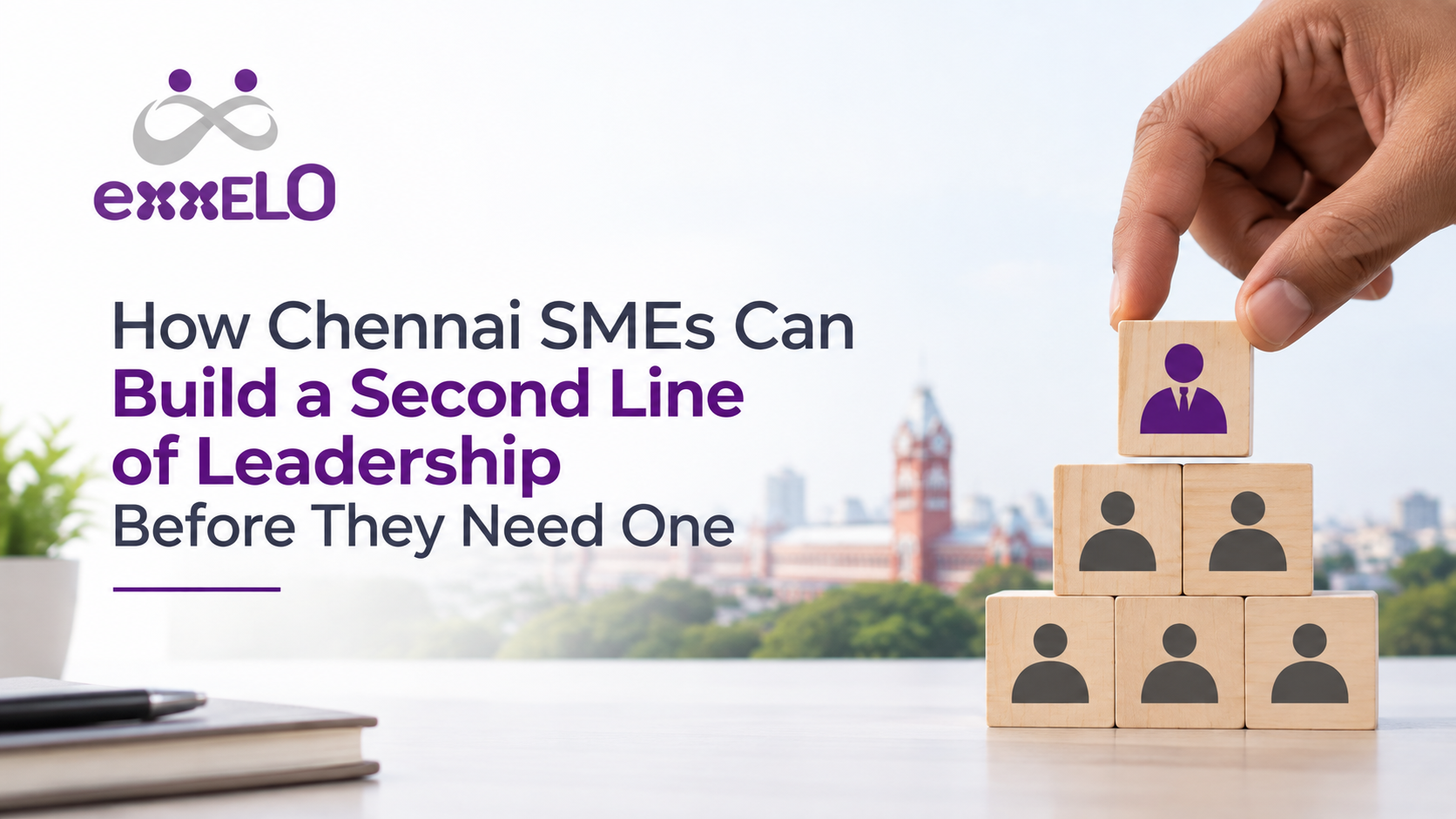
Building a Team That Doesn't Depend on the Founder One practical sign of organisational maturity is whether the business can keep operating effectively when the founder steps away for a period of time, whether that is a two-week vacation or simply a demanding week focused elsewhere. That kind of resilience is not an accident. It is built deliberately, usually starting with leadership at the level just below the owner, the managers and team leads who end up making the hundred small decisions a founder used to make personally. Why Leadership Development Has Become Non-Negotiable As Chennai companies grow past the founder-led stage, the skills that got them here rarely stay sufficient on their own. A founder's instinct is not something a growing team can simply absorb by watching. Structured leadership development programs india have become a genuine part of how mid-sized businesses build the second layer of decision-makers they will eventually need, rather than discovering the gap only after the founder is already stretched too thin to fix it.
What This Shift Looks Like Across India's MSME Sector
India's more than 7 crore MSMEs are, by most economic measures, having a genuinely interesting year. India's MSME policy conversation has also shifted more explicitly toward scale. The Union Budget 2026-27 proposed a 10,000 crore rupee SME Growth Fund to help create future champions, alongside a 2,000 crore rupee top-up to the Self-Reliant India Fund. The Budget also emphasised professional and managerial support alongside equity and liquidity, signalling that capital alone is not enough for businesses trying to move to the next stage. None of that changes much for a founder in Chennai unless the underlying business is actually ready to use it well. Capital and policy support tend to reward businesses that already know where they are going. Coaching is often what gets a business to that point in the first place, rather than something that only makes sense once the destination is already obvious.
Making the Shift From Survival to Scale
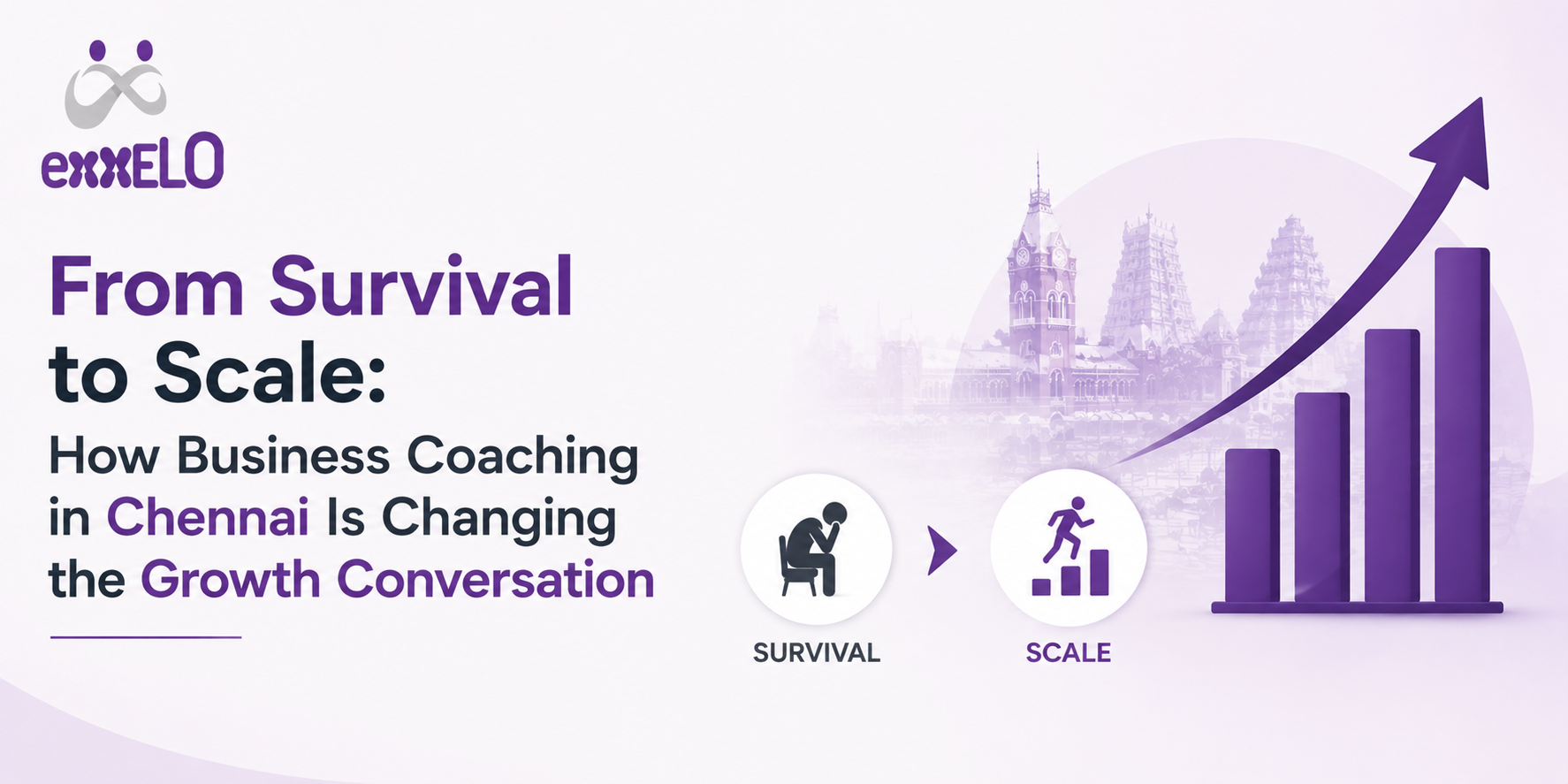
The founders who make this transition successfully rarely do it by working harder. Most of them were already working about as hard as a person reasonably can. What changes is where that effort goes: fewer fires to put out, more decisions made with a plan behind them instead of a guess, and a slowly growing willingness to hand off work that used to feel too risky to delegate. None of that happens instantly, and it rarely happens alone.
Frequently Asked Questions
What is the difference between business coaching and business consulting? Business coaching generally focuses on the founder or leadership team, helping them think more clearly, set priorities, and build better decision-making habits over time. Business consulting tends to focus on the business itself, solving a specific operational, financial, or strategic problem. Many growing companies use both at different stages. How do I know if my business is stuck in survival mode? Common signs include the owner being involved in nearly every decision, inconsistent or reactive pricing, growth that depends heavily on luck or referrals rather than a repeatable process, and a general sense of being busy without a clear sense of forward progress. Is business coaching only useful for larger companies? No. Coaching is often most valuable for small and mid-sized businesses precisely because the owner still wears many hats. Larger companies typically already have layers of management in place, while smaller businesses are usually the ones still trying to build that structure. Why does leadership development matter for a growing business? As a business grows, it needs decision-makers beyond the founder. Leadership development helps build that second layer of managers and team leads, so the business does not remain entirely dependent on one person's daily involvement to function well. How long does it typically take to see results from business coaching? The timeline varies by business, the issues being addressed, and how consistently the recommendations are implemented. Improvements in clarity and decision-making may emerge relatively early, while deeper changes such as reducing founder dependency can take considerably longer to fully take hold. What industries in Chennai benefit most from business coaching? Business coaching can be useful across industries because many leadership and growth challenges are not industry specific. In Chennai, businesses in manufacturing, technology, healthcare, retail, logistics, professional services, and other sectors may encounter similar issues around leadership, delegation, operations, and growth.
Key Takeaway
Chennai's business community is not short on hardworking, capable owners. What many of them are missing is the outside perspective that turns effort into direction, and the structure that lets a business grow beyond what one person can personally hold together. If your business feels like it has been surviving well for a while and you are ready to figure out what scaling actually looks like, contact us and let's talk through where you actually are and what the next stage could look like.
Ready to move your business beyond survival mode? Talk to Exxelo about your growth challenges and explore what the next stage could look like.
Talk to Exxelo