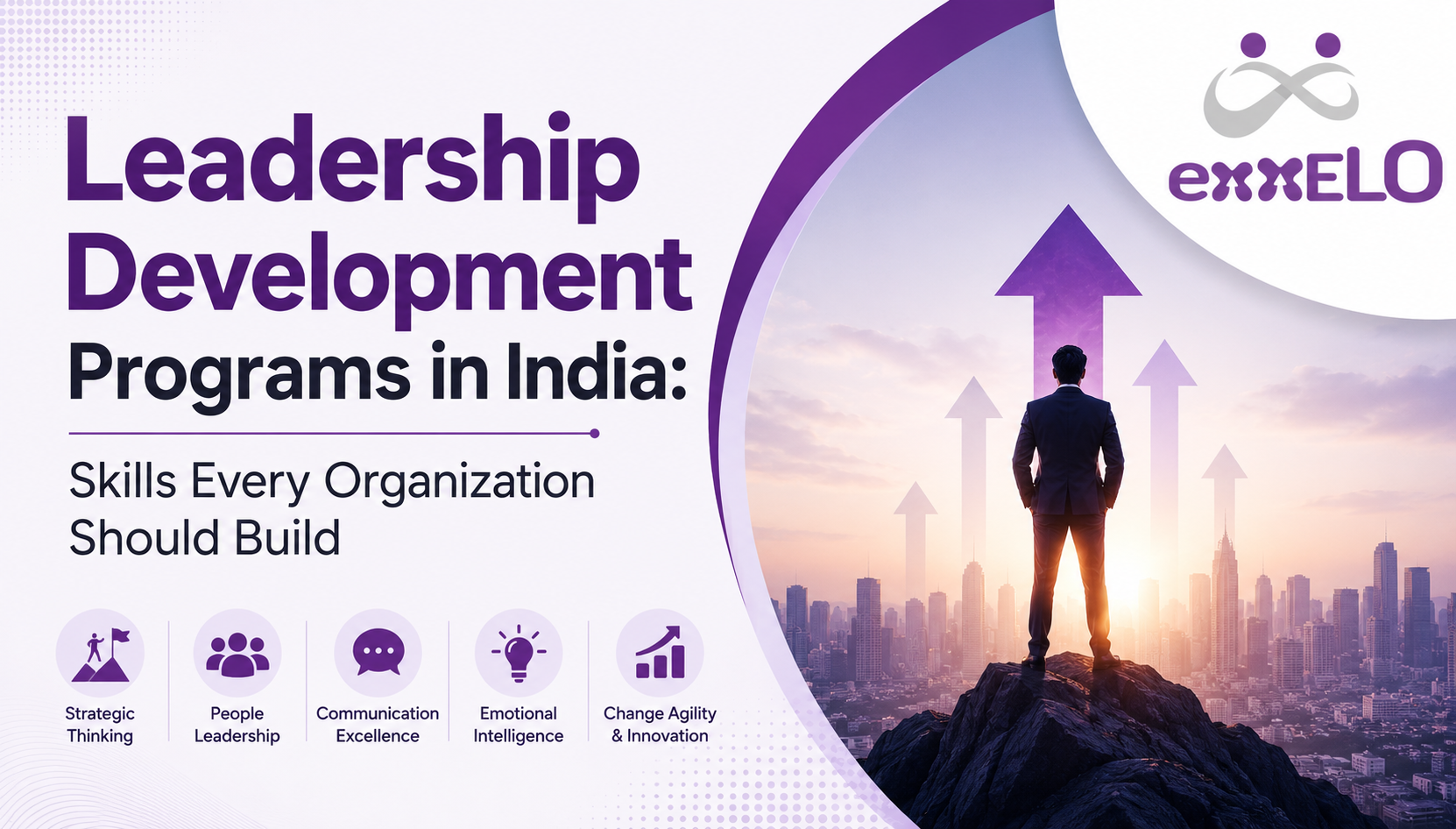
Leadership Development Programs in India: Skills Every Organization Should Build
Indian organizations are changing faster than their leadership pipelines can keep up with. Teams now span four generations, decisions increasingly involve AI-generated data, and hierarchy is giving way to flatter, faster moving structures. Yet many companies still promote people into leadership roles based on tenure or technical skill, then leave them to figure out the rest on their own. National employability figures have been climbing steadily as more professionals have gained exposure to digital tools, but leadership readiness has not kept pace at the same rate, leaving a widening gap between technically capable employees and genuinely prepared leaders. Closing this gap is exactly what well designed leadership development programs in India are meant to address, and understanding which specific skills matter most is the first step toward building them deliberately rather than by accident.
Why Leadership Skills Are Changing Faster Than Ever
The Shift From Command Control to Coaching
For decades, Indian management culture leaned heavily on hierarchy, with decisions flowing from the top and execution expected without much discussion. That model is losing effectiveness as younger employees expect context, autonomy, and regular feedback rather than instructions alone. Leaders today are increasingly expected to coach their teams toward outcomes instead of simply directing tasks, which requires a different set of habits than the ones that got most current managers promoted in the first place.
Technology Is Changing What Leaders Need to Know
A large share of the Indian workforce already uses generative AI tools in daily work, which means leaders are now expected to guide decisions shaped partly by machine-generated insights rather than relying purely on experience and intuition. This does not mean every leader needs to become a technical expert, but it does mean leaders who cannot interpret or question AI-supported recommendations will struggle to guide teams that increasingly work this way. Organizations across sectors, from banking and financial services to technology and manufacturing, are already reporting meaningful adoption of AI tools in day-to-day operations, which raises the bar for what leaders are expected to understand even without writing a single line of code themselves.
Core Skills Every Future-Ready Leader Needs
Adaptive Decision Making Under Uncertainty
Markets, supply chains, and customer expectations continue to shift more frequently than in previous decades, which means leaders need to make sound decisions with incomplete information rather than waiting for perfect data. This is less about having all the answers and more about building a repeatable process for weighing risk, testing assumptions quickly, and adjusting course without losing team confidence along the way. Leaders who wait for complete certainty before acting often fall behind competitors willing to make well reasoned decisions with the information available at the time, then correct course as new information arrives.
Emotional Intelligence as a Business Skill
Emotional intelligence has moved from a soft skill mentioned in passing to a measurable driver of retention and performance. Leaders who can read a room, manage their own reactions under pressure, and address conflict directly rather than avoiding it tend to keep stronger teams intact during periods of change, which matters enormously given how competitive skilled talent has become across most Indian industries.
Digital and AI Fluency
Leaders no longer need to write code, but they do need enough fluency to ask the right questions about automation, data quality, and AI-generated recommendations that increasingly inform business decisions.
What AI Fluency Actually Means for a Non-Technical Leader
Practical AI fluency means understanding what a tool can and cannot reliably do, recognizing when an AI-generated output needs human judgment before acting on it, and knowing enough to ask a technical team informed questions rather than accepting outputs at face value. It is closer to informed skepticism than technical expertise.
Leading a Multi-generational Workforce
Many Indian organizations now manage employees ranging from early career graduates to leaders with decades of experience, each with different expectations around communication, feedback, and career growth. A future-ready leader adapts their approach across this range rather than applying a single management style to everyone, which requires genuine flexibility rather than a checklist of generational stereotypes.
Building These Skills Inside an Indian Organization
Why Off-the-Shelf Training Rarely Works
Generic leadership workshops delivered once a year rarely change behavior in any lasting way, since a single session cannot address the specific pressures, culture, and blind spots unique to a particular organization. Skills like emotional intelligence and adaptive decision making develop through repeated practice and feedback over time, not through a slide deck reviewed once and then filed away. A program built around one organization’s real challenges, rather than a generic curriculum reused across every client, tends to produce far more durable change in how leaders actually behave once the training itself has ended.
The Role of Structured Coaching
Structured coaching addresses this gap by working with leaders over an extended period, applying new skills directly to real situations they are facing rather than hypothetical case studies. This is why many Indian companies are turning to business coaching in Chennai and similar hubs, where coaches work closely with leadership teams to reinforce these skills through ongoing practice rather than a single workshop.
Group Coaching vs One-on-One Coaching
Group coaching works well for building shared language and consistent expectations across a leadership team, while one-on-one coaching allows a leader to work through specific, personal challenges that would not surface comfortably in a group setting. Many organizations combine both, using group sessions to align on core skills and individual coaching to address the particular gaps each leader carries.
Common Mistakes Organizations Make When Building Leadership Capability
Treating Leadership Development as a One-Time Event
Sending leaders to a single training session and considering the job done is one of the most common reasons leadership initiatives fail to produce lasting change. Skill building requires reinforcement across months, not a single day, since new habits fade quickly without follow-up and accountability.
Measuring Attendance Instead of Behavior Change
Many organizations track how many leaders attended a program rather than whether their day-to-day behavior actually changed afterward. Without follow-up assessments, peer feedback, or measurable performance indicators tied to the skills being taught, it becomes nearly impossible to know whether the investment produced any real return.
How to Choose the Right Leadership Partner
Selecting the right partner matters as much as the content of the program itself. A capable business consultant in Chennai will start by understanding the specific pressures your organization faces rather than proposing a standard curriculum immediately. Look for a partner who asks about your industry, your leadership bench strength, and your existing culture before recommending an approach, and who can point to a clear method for measuring whether leaders are actually applying new skills back on the job.
Measuring the Real Impact of Leadership Development
Signs the Investment Is Working
The clearest signal that leadership development is working shows up in team-level outcomes rather than leader self-reports. Lower attrition among high performers, faster resolution of internal conflicts, and more consistent decision making during periods of pressure all indicate that new skills are actually being applied rather than simply discussed in a workshop.
Building Feedback Loops That Actually Work
Regular, structured feedback from direct reports and peers gives leaders a realistic view of how their behavior is landing, which is often very different from how leaders perceive themselves. Organizations that build this feedback into a recurring cycle, rather than a one-time survey, give leaders the ongoing information they need to keep adjusting long after a formal coaching engagement ends.
Frequently Asked Questions
How long does it typically take to build stronger leadership skills in an organization?
Meaningful behavior change in leaders usually takes several months of consistent coaching and practice rather than weeks, since habits built over years of a different management style do not shift quickly. Most structured programs run for a minimum of two to three months before measurable changes in leadership behavior become visible.
Is leadership coaching only useful for senior executives?
No. Middle managers and first-time team leads often benefit the most, since they are usually the ones directly shaping daily employee experience and are frequently promoted without any formal leadership preparation at all.
Can smaller organizations benefit from structured leadership development, or is it only for large companies?
Smaller organizations often benefit even more, since a single leader’s blind spot or strength has a proportionally larger impact on a small team than it would in a large enterprise with more layers of management to absorb the effect.
What is the difference between leadership training and leadership coaching?
Training typically delivers information in a structured session, while coaching works with an individual or group over time to apply that information to real situations, with ongoing feedback and adjustment. Most organizations see stronger, longer lasting results when the two are combined rather than relying on training alone.
Conclusion
Indian organizations that invest deliberately in adaptive decision making, emotional intelligence, digital fluency, and multigenerational leadership will be better positioned to retain talent and navigate change than those that leave leadership development to chance. These skills are built gradually, through consistent practice and honest feedback, not through a single workshop or a slide deck. If your organization is ready to build a leadership bench that can handle what the next few years will bring, contact us to discuss what a structured, practical approach to leadership development could look like for your team.