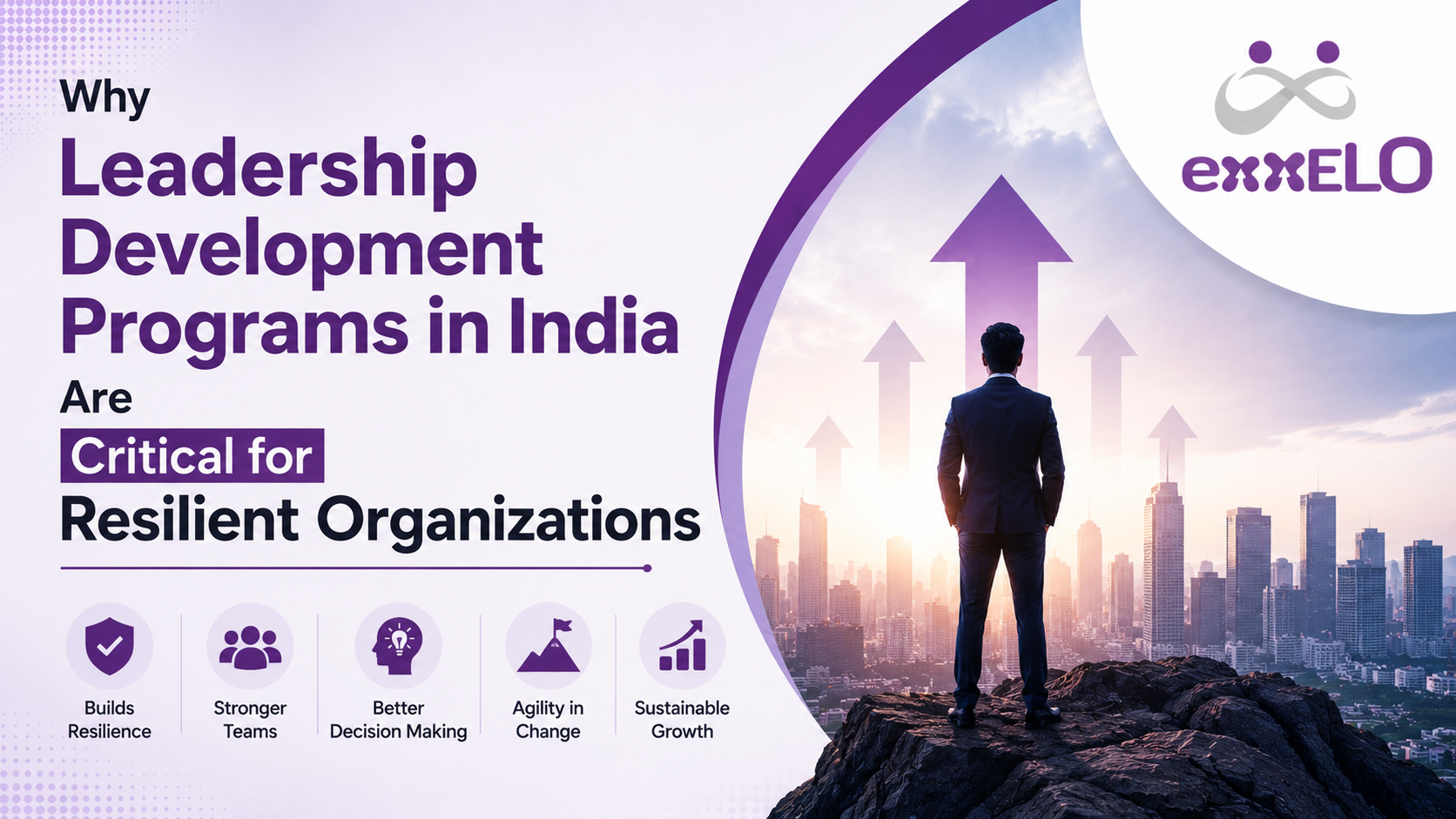
Why Leadership Development Programs in India Are Critical for Resilient Organizations

Leadership development programs in India building resilient organizations through effective leadership

Indian organizations are growing faster and managing more complex, distributed teams than ever before, and many are discovering that technical skill alone does not prepare managers to lead through that complexity. This is why structured leadership development programs in India have moved from a nice-to-have benefit into a core part of business strategy for companies that want to stay competitive. This article looks at what makes these programs effective, the components that build genuine resilience in leaders, and the trends shaping how Indian organizations approach leadership training today.

Why Leadership Development Has Become a Business Priority in India

A few years ago, leadership training was often treated as a reward for senior employees or a one-time workshop tied to a promotion. That approach rarely produced lasting change. Organizations have since recognized that leadership capability directly affects retention, decision quality, and how well a company adapts to market shifts.

India’s business environment adds specific pressure to this shift. Companies are managing hybrid teams across multiple cities, navigating rapid digital adoption, and competing in markets where customer expectations change quickly. Leaders who cannot adapt at the same pace become a liability rather than an asset, which is why structured development has moved from optional to essential.

What Makes a Leadership Development Program Effective

Not every program produces the same results. Several factors separate initiatives that create lasting behavior change from those that end when the training session does.

Aligning Programs with Business Strategy

Effective programs are designed around the specific challenges an organization is facing, rather than generic leadership theory. A company scaling into new markets needs leaders who can manage ambiguity, while a company focused on operational efficiency needs leaders skilled in process improvement and team accountability. Programs built around real business priorities see far stronger adoption than one-size-fits-all training.

Blending Coaching, Mentorship, and Structured Training

Classroom-style workshops alone rarely change how someone leads day-to-day. The programs that produce measurable results usually combine structured training with ongoing coaching, peer mentorship, and real-world application, giving leaders a chance to practice new approaches in actual work situations rather than only in a training room.

The Role of Business Coaching in Chennai’s Growing Corporate Sector

As more mid-sized and large enterprises expand their operations in South India, demand for individualized guidance has grown alongside group training. business coaching in Chennai typically complements formal leadership development programs, giving individual leaders a space to work through specific challenges such as managing conflict, delegating effectively, or navigating a first-time leadership role, in a way that a group workshop format cannot fully address.

Measuring Impact Beyond Attendance

Programs that track only attendance and satisfaction scores tend to lose executive support over time, since these metrics say little about whether behavior actually changed. Stronger programs measure outcomes such as employee retention on a leader’s team, 360-degree feedback improvements, and progress on specific leadership competencies identified at the start of the program.

Core Components of Resilient Leadership Development

Resilience in leadership is not a single skill. It is built from several capabilities working together.

Emotional Intelligence and Self-Awareness

Leaders with strong emotional intelligence build more cohesive teams and retain talent longer, particularly in a business culture where relationship building often carries as much weight as transactional performance. Self-awareness, in particular, helps leaders recognize their own blind spots before those gaps affect their teams.

Strategic Thinking Under Uncertainty

Markets shift quickly, and leaders need frameworks for making sound decisions even when information is incomplete. Strategic thinking modules typically focus on scenario planning, risk assessment, and the ability to adjust a plan without losing sight of the underlying goal.

Decision Making in Complex, Fast-Changing Environments

Beyond strategy, leaders need practical decision making skills for day-to-day situations: prioritizing competing demands, delegating under pressure, and making calls with limited time. Programs that include simulations or real time business scenarios tend to build this capability more effectively than lecture-based formats.

Communication and Cross-Functional Collaboration

Many leadership failures trace back to poor communication rather than a lack of technical knowledge. Leaders who cannot clearly set expectations, give constructive feedback, or coordinate across departments create friction that slows down execution even when individual team members are skilled. Development programs that dedicate time to structured feedback techniques and cross-functional collaboration tend to see faster improvements in team output than those focused purely on individual leadership traits.

Leadership Development Trends Shaping Indian Organizations

The format and focus of leadership training has evolved considerably over the past several years.

Hybrid and Digital Learning Formats

Many organizations now combine in person workshops with mobile-first microlearning and learning management platforms, allowing leaders across different cities or time zones to progress through material at a consistent pace without requiring everyone to travel to a single location.

Personalized, Data-Driven Development Paths

Rather than putting every participant through an identical curriculum, more programs now use behavioral assessments to tailor content to each leader’s specific gaps, whether that means additional focus on communication, delegation, or strategic planning.

Focus on Well-being and Burnout Prevention

Resilience training increasingly includes modules on stress management and burnout prevention, recognizing that a leader who cannot manage their own workload sustainably will struggle to lead a team through pressure over the long term.

How Business Consultants Support Leadership Transformation

Leadership programs rarely succeed in isolation from the rest of an organization’s structure. A business consultant in Chennai often helps organizations identify whether leadership gaps stem from a lack of individual skill or from structural issues such as unclear reporting lines, conflicting priorities between departments, or performance systems that do not reward the behaviors leadership training is designed to build. Addressing these structural factors alongside individual coaching tends to produce more durable results than training alone.

Common Challenges Organizations Face When Building Leadership Pipelines

Several recurring obstacles show up when companies attempt to build a leadership pipeline without a clear plan.

  • Relying on a small group of senior leaders instead of developing capability across multiple levels of the organization.
  • Treating leadership training as a one-time event rather than an ongoing process tied to career progression.
  • Measuring success through attendance or satisfaction surveys instead of tracking actual changes in team performance and retention.
  • Failing to align program content with the specific strategic challenges the organization is facing.
  • Underinvesting in follow-up coaching after the initial training sessions end.

Building a Leadership Development Roadmap for Your Organization

A workable roadmap usually starts with identifying the specific leadership gaps holding the organization back, whether that is a lack of succession planning, weak cross-functional collaboration, or high turnover among first-time managers. From there, organizations typically prioritize a small number of high impact interventions rather than attempting to address every gap simultaneously.

Ongoing measurement matters as much as the initial design. Reassessing leadership competencies every few months, gathering feedback from direct reports, and adjusting the program based on what is and is not working keeps a leadership pipeline responsive rather than static. Organizations that treat this as a continuous process, rather than a project with a fixed end date, tend to build leadership benches that hold up under real pressure.

Frequently Asked Questions

What is the difference between leadership training and leadership development?

Leadership training usually refers to a specific workshop or course covering a defined skill, while leadership development is a broader, ongoing process that combines training, coaching, mentorship, and real-world application over time.

How long does it typically take to see results from a leadership program?

Initial shifts in confidence and awareness often appear within a few months, but measurable changes in team performance and retention usually take six months to a year, since sustained behavior change requires repeated practice rather than a single session. Organizations that pair training with ongoing coaching tend to see results sooner than those relying on training alone.

Are leadership development programs only for senior executives?

No. Many organizations now extend structured development to first-time managers and high-potential employees earlier in their careers, since building leadership capability at multiple levels reduces reliance on a small group of senior leaders.

How do organizations measure the return on investment of leadership training?

Common measures include improvements in employee retention on a leader’s team, 360-degree feedback scores, progress against specific competencies identified before the program began, and business outcomes tied to the leader’s role.

Can leadership development help with employee retention?

Yes. Employees frequently leave organizations due to poor management rather than the role itself, so improving how leaders communicate, delegate, and support their teams often has a direct effect on how long employees stay.

Final Thoughts

Building resilient organizations in India requires more than hiring capable people. It requires a deliberate, ongoing investment in how those people are prepared to lead through complexity, uncertainty, and constant change. Programs that are aligned with real business challenges, combine coaching with structured training, and measure outcomes beyond attendance tend to produce leaders who can hold up under pressure rather than simply completing a course. If your organization is ready to build a leadership pipeline that lasts, contact us to discuss a program suited to your specific goals.

Exxelo-new-logo-14th-june-01

At Exxelo, we believe that sustainable business growth stems from the strength of people, strategy, and streamlined systems. We are a people-first business consulting company with a 360° approach—offering end-to-end solutions across Recruitment, Business Consulting, Training & Development, and Payroll Management.

Contact Us

© 2025 All Rights Reserved By Exxelo Business Consulting