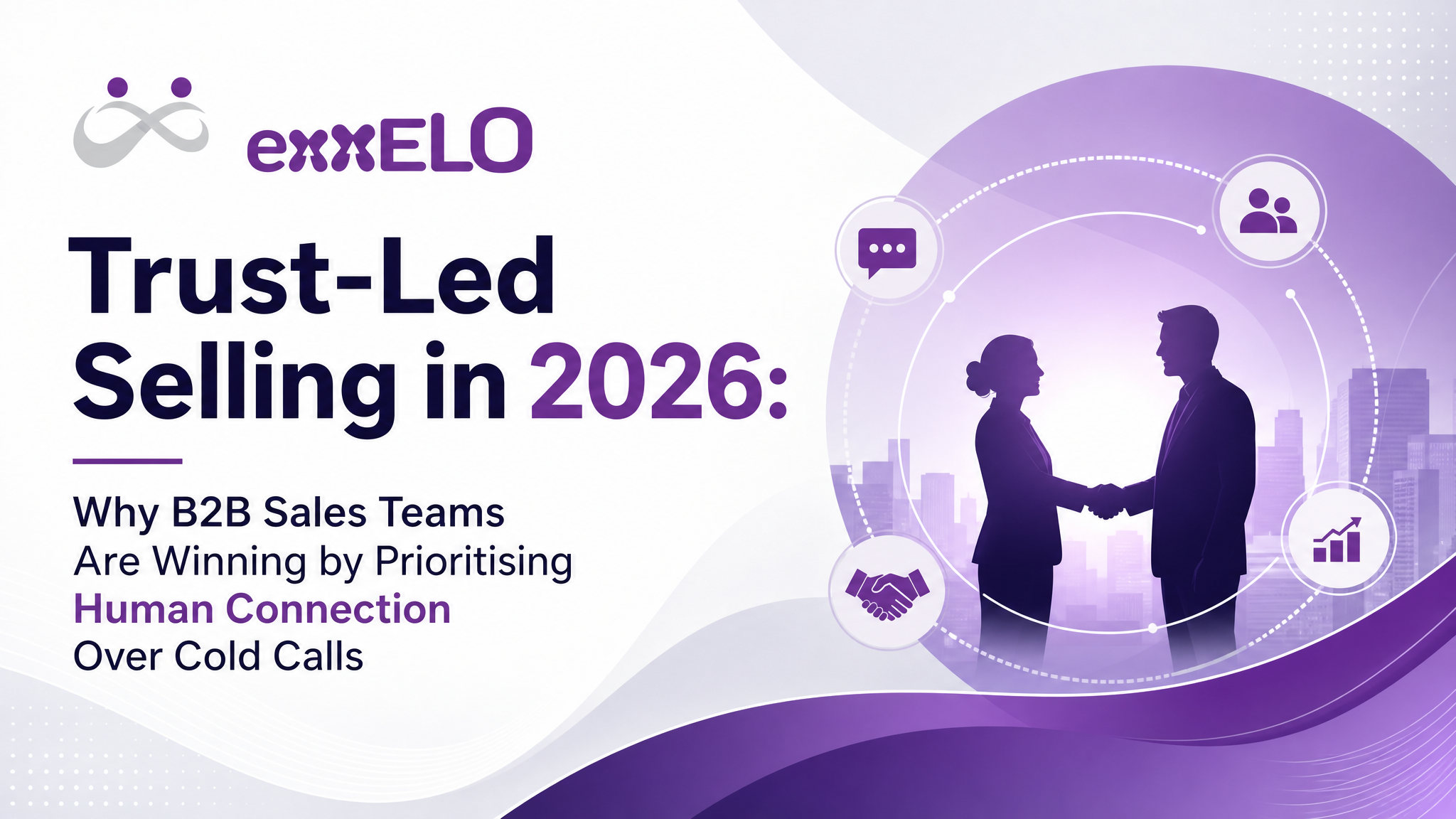
The B2B buyer in 2026 has almost certainly done their research before taking your call. They have read your website, looked at your LinkedIn profile, possibly read a review, and formed a preliminary view of whether you are worth thirty minutes of their time. The generic pitch and the cold script land in a full inbox. They do not open. This is not a temporary shift. It reflects a fundamental change in how B2B purchasing decisions are made. Buyers are more informed, more selective, and more resistant to pressure-based selling than at any previous point. The volume-first, persistence-based approach that worked in an earlier era is producing diminishing returns in almost every sector. The sales teams that are consistently outperforming in 2026 are not the ones with the highest call volumes. They are the ones that have built the deepest trust. Data-driven sales organisations are reportedly 58% more likely to exceed their targets compared to peers who rely primarily on intuition and activity volume. — Sales Performance Research, 2025
What Changed and Why It Matters
Several forces have converged to make trust the defining variable in B2B sales.
Buyers have more information. They can evaluate competing solutions, read case studies, and consult peer networks before engaging a vendor. By the time a salesperson enters the picture, the buyer’s position is often already partly formed. A generic pitch that does not engage with what the buyer already knows, or what they are specifically trying to solve, is immediately recognisable as a template.
Decision cycles have also grown more complex. Most significant B2B purchases in India involve multiple stakeholders: finance, procurement, the end user, and sometimes a leadership sign-off. Building trust with one contact is no longer sufficient. The salesperson who can credibly navigate multiple relationships across a buying organisation is the one who closes.
AI tools have made outreach more efficient, but they have not made credibility more scalable. A personalised, well-timed message supported by genuine research still reads differently from an AI-generated sequence, even when both are delivered to the same inbox. Buyers recognise the difference. AI can support outreach, but it cannot replace credibility.
Cold Call-First vs. Trust-Led Selling
The traditional cold call-first model is built around volume and persistence: call enough people often enough and some proportion will convert. It works on the assumption that the salesperson controls the conversation and the buyer is a passive recipient of information.
Trust-led selling starts from a different premise. The buyer is an informed professional with specific priorities and limited time. They will engage if the conversation is relevant and adds something they do not already have. They will disengage the moment it feels like a pitch they have heard before.
The contrast shows up most clearly in how the first contact is initiated. A cold call-first model opens with a product or a promotion. A trust-led model opens with a question or an observation that demonstrates genuine understanding of the buyer’s context. One asks for time. The other earns it.
The Building Blocks of Trust-Led Selling
Personalisation before contact
Genuine personalisation is not inserting a first name into a template. It is researching the company, understanding the sector pressures they are operating under, and identifying a specific problem your solution addresses for their situation. That level of preparation is visible to the buyer immediately and signals a quality of attention that generic outreach cannot replicate.
Understanding the buyer’s actual problem
The consultative selling conversation starts with listening, not presenting. Many organisations strengthen this capability through sales-focused coaching initiatives and business coaching Chennai companies increasingly invest in to improve client conversations and commercial outcomes. High-performing B2B sellers spend the early part of a conversation asking questions that reveal the buyer’s priorities, constraints, and decision criteria. The solution comes after the problem is fully understood, not before. Buyers do not want another generic pitch. They want a conversation with someone who has taken the time to understand what they are dealing with.
Consistent and relevant follow-up
The difference between persistent and annoying follow-up is relevance. A follow-up that adds something, whether it is a case study, a market observation, or a response to something the buyer mentioned, maintains the relationship without applying pressure. A follow-up that simply asks whether they have made a decision signals that the seller’s interest is in the close rather than in the buyer. In long B2B sales cycles, the quality of follow-up over time is often what determines who ultimately wins the business.
Credibility built over multiple touchpoints
Trust in a B2B context is not built in a single conversation. It is built through a series of interactions where the buyer progressively develops confidence in the seller’s expertise, reliability, and honesty about what the solution can and cannot do. Sellers who overclaim, or who avoid difficult questions, erode the trust they are trying to build. Sellers who are consistently accurate and forthright, even when that means acknowledging limitations, build a credibility that becomes genuinely difficult for competitors to displace.
Team alignment between sales and marketing
Similar principles are increasingly being incorporated into leadership development programs India organisations use to improve cross-functional collaboration, accountability, and business performance. The best sales teams combine systems with human judgment. Marketing and sales teams that operate from the same understanding of the buyer, using consistent messaging and a shared view of the pipeline, create a more coherent and credible buying experience. The buyer who reads a company’s content, attends a webinar, and then speaks to a salesperson should feel continuity, not contradiction. Misalignment between sales and marketing is one of the most common sources of buyer confusion and lost deals in growing B2B companies.
The Role of Data in Trust-Led Selling
Trust-led selling does not mean less rigorous. Data-driven sales teams, those that use pipeline analytics, buyer behaviour signals, and sector data to inform when and how they engage, outperform those that rely on volume and instinct. The data does not replace the human connection. It sharpens it: telling the salesperson which accounts are showing buying signals, which conversations are progressing, and where time is best invested.
Sales training trends for 2026 reflect this integration. The skills being prioritised are not simply about rapport or closing techniques. They are about using information intelligently, personalising at scale, and building the kind of long-term buyer relationships that generate repeat business and referrals alongside initial conversions.
Helping Teams Make the Shift
The shift from pressure-based to trust-based selling is not automatic. It often requires managers and sales leaders to develop stronger coaching and communication capabilities through leadership training Chennai organisations are adopting to build more effective commercial teams. It requires salespeople to develop habits that feel different from what most of them were trained to do: slower openings, more listening, less certainty in the early stages, and a longer time horizon for what constitutes a successful conversation.
That shift happens through training that is specific to the selling context, the buyer profile, and the competitive environment the team is operating in. Sales training that builds these skills, and then reinforces them through coaching and structured practice, produces measurable improvement in conversion rates, deal size, and sales cycle length. Many organisations also work with a business consultant Chennai companies rely on to align sales processes, leadership capability, and growth strategy.
The sales teams that will win the most business in the next few years are not the ones with the most contacts in their CRM. They are the ones whose buyers trust them enough to tell the truth about what they actually need.
Ready to build a sales team that earns trust and closes with confidence?
Exxelo helps B2B sales teams build stronger conversations, sharper buyer understanding, and more effective selling habits through practical corporate training Chennai businesses trust and sales development programs delivered across India.
Visit exxelo.org or reach out via WhatsApp to start the conversation.
About the Author
Viji Swaminathan | Managing Director & CEO, Exxelo Business Consulting
Certified Independent Director | Founder, Inner Strength Trust | Author
Viji Swaminathan is the Managing Director and CEO of Exxelo Business Consulting, a firm she co-founded to help growing businesses build the structure, people, and strategy needed to scale sustainably. A Certified Independent Director with more than two decades of experience spanning business building, organisational leadership, and human development, Viji brings a perspective that is grounded in operational reality rather than theory. She is the founder of Inner Strength Trust and a published author. Her core belief, that every business challenge is ultimately a people challenge, shapes how Exxelo works with every client it serves.